Русский язык
 Deutsch
 Italiano
 Français
 Español
 Português
 Türkçe



















Meet Christian Colombian Brides Here

Devotion, Resilience, and the Allure of Partnership:
The Christian Colombian Woman
The Lived Reality of Faith in Colombia
To understand Christian Colombian women for marriage, one must first look past the travel ads and telenovelas. Colombia is a nation where evangelical Christianity has grown explosively—from around 3% of the population in the 1960s to nearly 20% today, and rising. For women inside this movement, faith is not a quiet accessory. It is a survival tool, a social network, and often a quiet engine of rebellion against deeply ingrained patriarchy.
In many Colombian cities and rural towns, a woman’s conversion to Protestantism or Pentecostalism is a radical act. Traditional Colombian machismo—often expressed through male infidelity, public drinking, and the cultural expectation that women tolerate both—is directly confronted by evangelical teaching. When a woman joins an iglesia cristiana, she gains a community that explicitly condemns womanizing and domestic violence. She also gains a new weekly rhythm: midweek prayer meetings, Sunday services, and women’s Bible circles known as células or grupos pequeños.
What is less understood outside Colombia is how these churches shift household power. A 2018 study of urban Bogotá found that women who became evangelical reported a measurable increase in bargaining power at home—not because they demanded it, but because their pastors and older church sisters taught them that the Bible’s ideal husband is a servant-leader, not a patrón. Verses like Ephesians 5:25 (“Husbands, love your wives, just as Christ loved the church”) are read aloud and discussed openly. For many Colombian women, this is the first time they have heard spiritual authority validate their dignity.
Economically, faith also drives action. Pentecostal churches especially encourage female entrepreneurship as a form of stewardship. Women open small tiendas (corner shops), sell arepas or empanadas near bus stops, or start home-based sewing circles. The biblical figure they admire is not a passive Mary, but Dorcas (Tabitha) from Acts 9—a woman known for making clothes for the poor and leading a community of widows. In the rough barrios of Medellín or Cali, a woman who provides for her children while staying active in church earns deep respect.
Yet this life is not easy. Many Christian Colombian women are single mothers by circumstance—abandoned by partners who migrated, were killed, or simply left. The church becomes their family. But religious leaders also place heavy demands on them: absolute sexual purity before remarriage, forgiveness of absent fathers, and public cheerfulness even in grinding poverty. This tension—between newfound spiritual power and old cultural pressure—is the furnace in which their character is forged.
Why American Men Are Drawn to Christian Colombian Women

For U.S. men exhausted by the transactional nature of modern dating—swipe culture, ghosting, and blurred commitments—Colombian Christian women represent a different promise. But the attraction is not what many assume.
First, there is the absence of cynicism. Christian Colombian women have typically suffered real loss—displacement, economic instability, or family fracture. Yet inside their faith, they cultivate a posture of hope rather than resentment. American men repeatedly report that these women are grateful for small kindnesses: a man who shows up on time, who texts when he says he will, who does not raise his voice. In a U.S. context where basic reliability is often taken for granted, this gratitude feels transformative.
Second, there is an explicit theology of marriage. In many Colombian evangelical circles, marriage is taught as a covenant before God, not a contract to be renegotiated when feelings fade. Women are raised to see loyalty as a spiritual discipline. This does not mean they tolerate abuse—quite the opposite. But it does mean they do not treat every conflict as a dealbreaker. American men who feel burned by high-divorce-rate environments see this as rare and precious.
Third, there is family fusion. Unlike the Western ideal of a nuclear couple orbiting separately from parents, Christian Colombian women expect their future husband to absorb her entire family system. You marry her familia, not just her. For men who grew up in distant or fragmented American families, this warmth can feel like coming home. It also comes with obligations: sending remittances, attending cousins’ birthdays, and hosting her mother for months at a time. The attraction is real, but so are the demands.
And finally, from the woman’s perspective, American men are often perceived as less dangerous. Colombia has a tragic history of gendered violence, disappearances, and impunity. A U.S. citizen, by contrast, is seen as operating within a legal system that (however imperfectly) protects women. Many Christian Colombian women also report that American men are more likely to share household labor and respect a wife’s spiritual leadership. This is not about money—though economic stability matters. It is about the quiet terror of living under a local man who believes he is entitled to control.
The Correct Path: Bringing Her to the United States
If you are fortunate to date a Christian Colombian woman for marriage and want to marry in the U.S., the most reliable legal route is the K-1 Fiancé Visa. But do not rush this. Colombian women have sharp radars for men who want a green-card arrangement rather than a real marriage. You must earn trust first—often over many months of video calls, letters, and at least one extended visit to her city.
Here is the step-by-step process, written plainly.
Phase 1: Prove the Relationship Is Real
You will file Form I-129F with USCIS. This is your petition to bring your fiancée to the U.S. for 90 days, during which you must marry. The government requires proof that you have met in person within the last two years. Save flight tickets, hotel receipts, photos with her family (crucial), and chat logs. Pro tip: Colombian evangelical women value public testimony. If her pastor writes a letter affirming your relationship as honorable and faith-aligned, include that.
Phase 2: The Consular Interview in Bogotá
Once USCIS approves, the case goes to the U.S. Embassy in Bogotá. Your fiancée must complete her DS-160, get a medical exam from an approved clinic, and attend an in-person interview. She will need:
-
Birth certificate (apostilled or certified).
-
Divorce or death certificates if previously married.
-
Colombian police certificate (Certificado de Antecedentes).
-
Evidence she has ties to Colombia—property, a job, or family dependent on her. This sounds counterintuitive, but the consular officer wants to see she is not desperate to flee. Church leadership letters also help here.
Warning: Colombian applicants face extra scrutiny because of past visa fraud. Be honest. One lie about how you met will end everything.
Phase 3: The 90-Day Window
She flies to you on the K-1 visa. You are not yet married. Within 90 days, you must hold a legal ceremony. It can be small—just a judge and two witnesses. The big church wedding can come later. If you miss the 90-day deadline, she must leave the U.S., and the visa is void.
Phase 4: Adjustment of Status
After the legal marriage, file Form I-485 to adjust her status to permanent resident. Also file Form I-864 (Affidavit of Support), where you promise to keep her household income above 125% of the federal poverty line. If you cannot do that alone, you will need a joint sponsor.
Realistic timeline: 14 to 20 months from filing to arrival. Cost: Approximately 1,200ingovernmentfeesplusmedicalexam(1,200ingovernmentfeesplusmedicalexam(300–$500) and travel.
How to Be the Man She Actually Marries
If you want to date a Christian mature Colombian woman successfully, forget the pickup lines. Here is what actually works.
Learn Colombian Spanish—not textbook Spanish. Understand usted (formal you) and tú (informal). Call her mother señora. Ask about her barrio without judgment. Do not show up expecting a beach vacation; show up willing to sit in a plastic chair outside her church and drink instant coffee.
Go to her church. Not as a tourist. Sit through the two-hour service. Sing the worship songs badly but sincerely. Colombian evangelicals test a man’s seriousness by whether he attends culto on a Wednesday night, not just Sunday. If you are not a believer yourself, be respectful and say so gently. But do not mock.
Respect the purity boundary. Many Christian Colombian women have made covenants to wait until marriage. If you pressure her sexually, you will be compared to every failed Colombian man she tried to avoid. Instead, court her openly. Ask her pastor for permission to date. Bring her flowers on a Tuesday for no reason.
Finally, be prepared for her to be stronger than you expect. She has navigated a country where the electricity fails, the buses are late, and men have broken promises routinely. She does not need a savior. She needs a partner who sees her as spiritually equal. The Christian Colombian woman is not running from her country; she is running toward a specific vision of a holy, shared life. If you can offer that, you are not just lucky. You are blessed.
Meet single Christian Colombian women here :
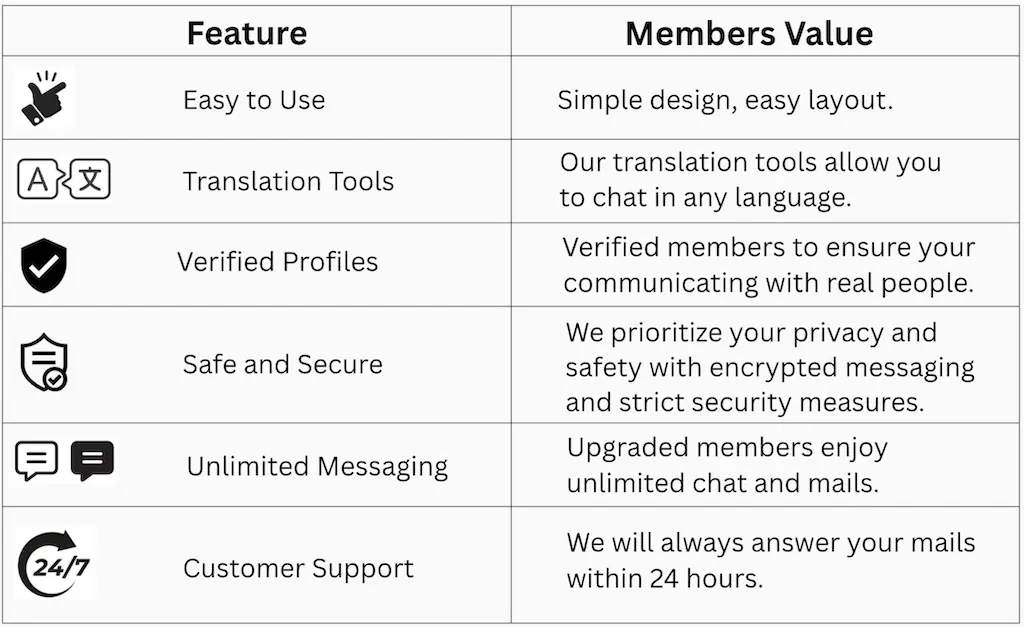
Meet Christian Colombian brides today. Join Free.
Bryn jacobs Chief Editor